Which Side Of Seneca Lake Is Better For Wineries?
An honest east-vs-west comparison of Seneca Lake wineries: what each shore offers, how the geography works, and which guided tours cover which side.
Which Side Of Seneca Lake Is Better For Wineries?
Neither shore wins outright, and any article that declares one the champion is guessing: no verified east-versus-west winery count exists, and the wineries themselves are spread along both. What actually matters is where you start, how far you want to drive, and whether you want the north-end concentration around Geneva or the quieter south-end cluster around Hector and Watkins Glen, and guided tours split along exactly those lines.
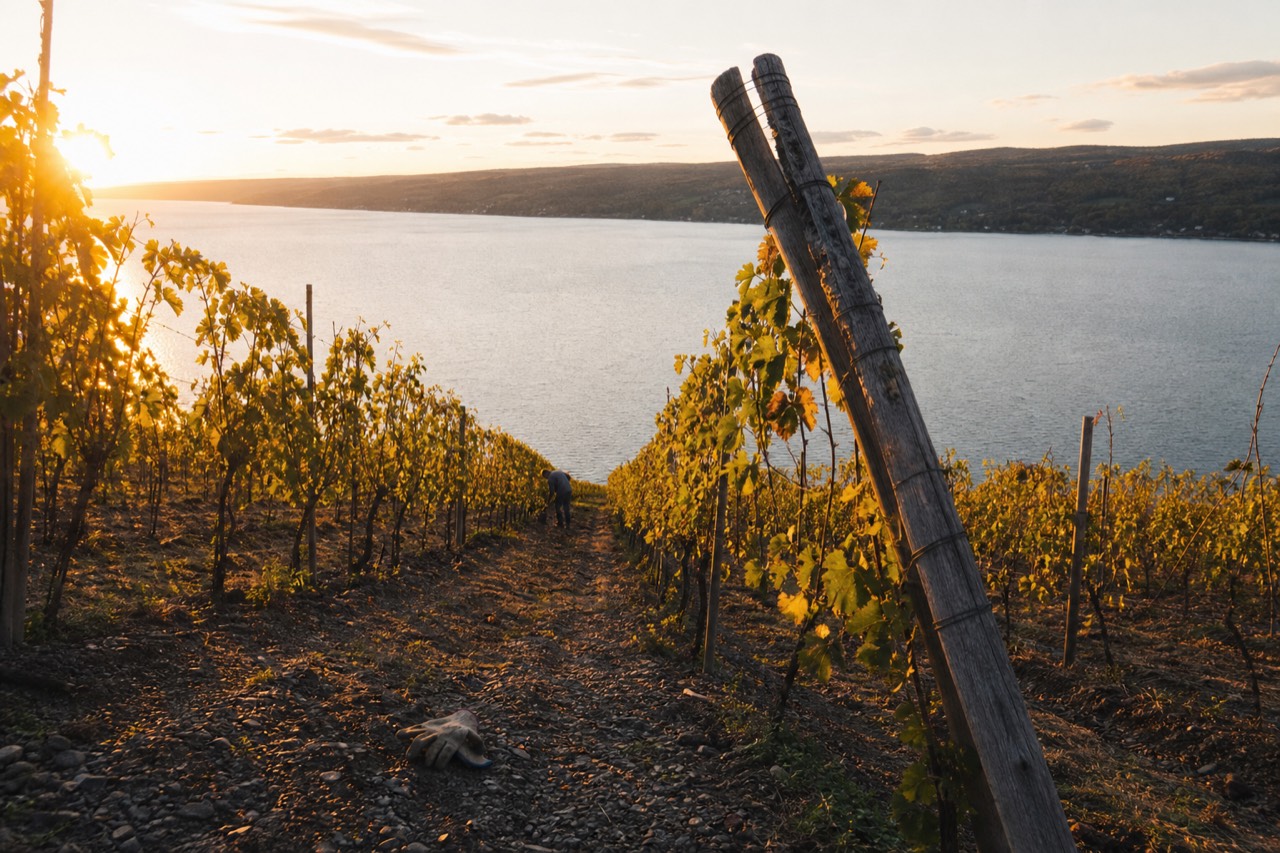
Seneca Lake is the engine of Finger Lakes wine country. It is the deepest of the lakes, running roughly 618 to 634 feet deep, and it rarely freezes over, holding a near-constant deep-water temperature around 39°F year-round. That thermal mass is why vineyards cluster on the slopes immediately around the water rather than scattering evenly across the region: the lake holds summer warmth into autumn, delaying the first killing frost so grapes ripen while keeping their acidity, and it buffers winter cold along the shoreline. It is the reason a cool-climate, acid-driven grape like Riesling does so well here, and Riesling is the region's signature pour, with Cabernet Franc the most-planted red.
The whole lake sits inside the Seneca Lake AVA, established in 2003 and codified at 27 CFR § 9.128, encompassing about 204,600 acres of land surrounding the lake within the larger Finger Lakes AVA. That is a citable, primary-sourced figure, and it is worth knowing because it means both shores share one federally recognized growing region. There is no "east bank appellation" and no "west bank appellation." The AVA boundary is the lake and its surrounding land, not one favored shore.
So the honest answer to east-versus-west is a planning question, not a quality question. The regional tourism association counts more than 100 wineries across the Finger Lakes, and the New York Wine & Grape Foundation puts the figure at about 144 for the region, but nobody publishes a trustworthy split of Seneca's wineries by shore. What you can plan around is geography and tour coverage, and that is where the real differences show up.
The shared small-group tours make the east-versus-west question mostly moot, because they cover multiple stops in a single trip. The default recommendation is the Seneca Lake Wine Tasting & Tour by Crush Beer and Wine Tours, from $263 per person with tastings included, running 5 to 6 hours with a cap of 12 travelers and a 4.7 rating across 220 reviews, the most-reviewed listing on this site. It departs from the 41 Lakefront Hotel, Trademark Collection by Wyndham, in Geneva, which sits at the north tip of the lake.
Those three options frame the real choice. The flagship shared tour covers the lake broadly from a Geneva departure. The Seneca Lake South Wine Tastings Tour, from $265 per person, with a 4.8 rating across 69 reviews, concentrates on the south end, 5 to 7 hours, capped at 12, non-refundable. And the customizable private van from FLX Chauffeur, from $389 per group of up to 4, lets you pick the wineries yourself, with tastings paid separately at the door. Same lake, three different ways to answer the shore question.
What Does The East Shore Offer?
The east shore's practical advantage is its northern anchor: Geneva, the departure point for the region's most-reviewed shared tours, sits on the north end of the east side, so tours leaving from there reach east-side wineries quickly and then work down the lake. The east-side road runs south toward Hector and Lodi, threading a long string of tasting rooms with lake views, and the shared van tours use exactly that corridor.
Geneva matters more than most visitors realize before they arrive. The Seneca Lake Wine Tasting & Tour departs from the 41 Lakefront Hotel in Geneva, which means if you are staying on the north end you are minutes from pickup rather than driving an hour to meet a tour. That single fact shapes a lot of itineraries: north-end lodging plus a shared tour is the lowest-friction way to taste the lake, and it is why the question "which side is better" often dissolves into "where do I start."
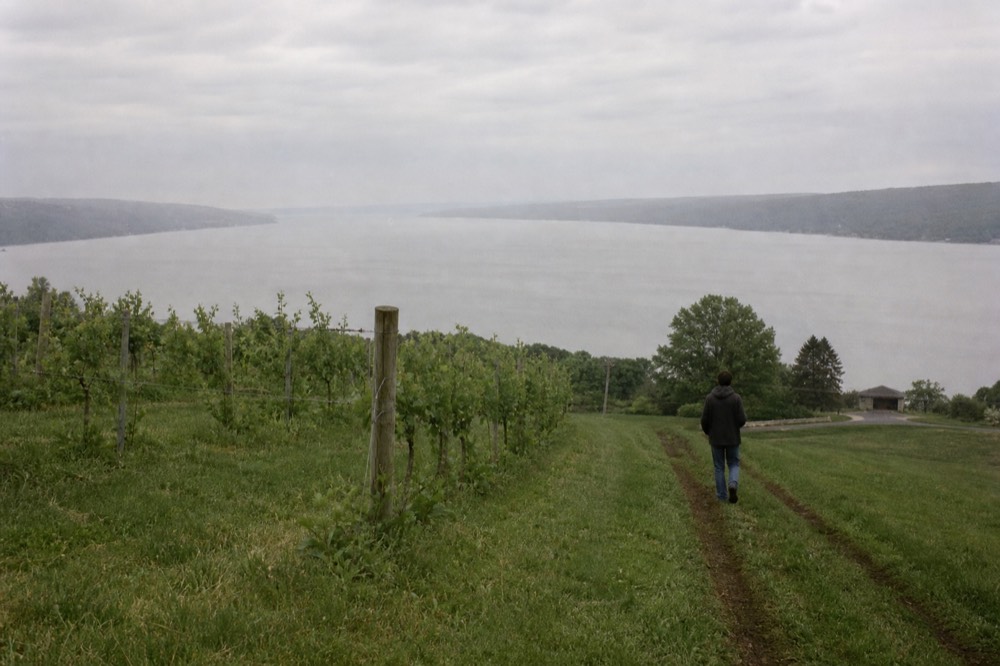
The east side's road south is also the route to some of the lake's best-known names, and the slope geometry that makes Seneca's wine good is at its most visible here: vineyards run down the hillsides almost to the waterline, taking full advantage of the lake's frost protection. If you drive it yourself in the shoulder season, expect tasting fees to vary by winery, check the room before you go, and remember that many wineries close their tasting bars in the late afternoon, a regional pattern worth planning around.
One planning note that catches people out: the flagship shared tour is non-refundable, while its twin listing on the other major booking platform, the identical itinerary from the same operator, allows free cancellation at a from-price of $259 per person. If your travel dates are not locked, that cancellation flexibility is worth checking before you book.
What Does The West Shore Offer?
The west shore's identity is the south end: the cluster of wineries around Hector, on the west side near the lake's southern tip, is dense enough that an entire guided tour exists just for it, the Seneca Lake South Wine Tastings Tour, from $265 per person. Watkins Glen, the region's best-known small town, also sits at the south end, which pairs wineries with a state park famous for its gorge.
The south-end tour is worth taking seriously. It carries a 4.8 rating across 69 reviews, runs 5 to 7 hours with a 12-traveler cap, and concentrates on the south of the lake rather than the whole perimeter. That matters because Seneca is a long lake, and driving its full length plus stopping at wineries is a full-day commitment. A south-focused tour trades breadth for depth, and the reviews suggest guests like that trade.
Watkins Glen as a base is its own argument. If you plan to hike the gorge in the morning and taste in the afternoon, the south end is the natural choice regardless of shore-count debates. The town anchors the south on the west side of the lake's southern tip, and from there the Hector-area wineries are a short drive north along the west shore.
For travelers who want the south end without a shared-group schedule, the customizable private option covers it too. FLX Chauffeur's Seneca Lake Wine Tour, from $389 per group of up to 4, runs about 6 hours, and the guest picks the wineries, with tastings extra and up to four winery stops of about an hour each per the operator's stated format. It carries a 5.0 rating across 9 reviews. It is non-refundable, so it suits travelers with firm dates.
If you are weighing Seneca against its neighbors rather than against itself, the comparison guide at Seneca vs Keuka vs Cayuga is the fuller read, and one differentiator worth knowing here: Keuka Lake has no AVA of its own, while Seneca and Cayuga each have a federally recognized sub-AVA inside the Finger Lakes AVA.
Can You Cover Both Shores In One Day?
Yes, but not by driving every tasting room yourself: the practical way to sample both sides is a shared van tour, which crosses the lake and hits multiple wineries in 5 to 7 hours, or a private customizable van where you pick one east stop and one west stop. Self-driving both full shores with real tastings is a two-day project.
The shared tour format exists precisely because the lake is long. The flagship Seneca Lake Wine Tasting & Tour, from $263 per person with tastings included in the price, runs 5 to 6 hours, capped at 12 travelers, with a 4.7 rating across 220 reviews. Because tastings are included, you are not paying tasting fees at the door on top of the ticket, which is how the shared Crush tours differ from the private FLX Chauffeur format where tastings are extra.
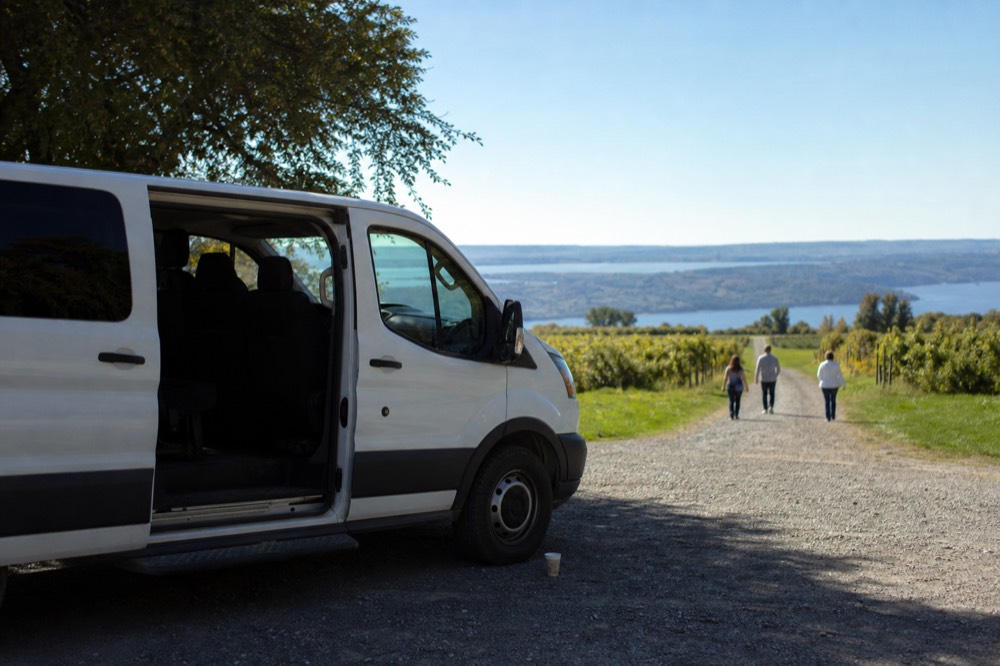
There is also a lunch version if you want a longer day: the Seneca Lake Wine Tasting Tour with Lunch, from $325 per person, runs 7 hours, includes lunch, and is the only Seneca listing that does. It is a newer, lightly reviewed listing with 4 reviews on file, so treat the rating as thin rather than proven, but the free-cancellation policy gives you flexibility the non-refundable flagship does not.
For groups, the arithmetic changes. The private option for up to 6 guests runs from $579 per group, 6 hours, tastings extra, the largest private group size on this site's roster. Split six ways that undercuts the per-person shared price, at the cost of paying tasting fees at each door.
Here is how the main Seneca options line up against each other:
| Tour | Format | Price | Duration | Reviews |
|---|---|---|---|---|
| Seneca Lake Wine Tasting & Tour (Crush) | Shared van, tastings included, departs Geneva | From $263 per person | 5-6 hours | 4.7 across 220 |
| Seneca Lake South Wine Tastings Tour (Crush) | Shared van, tastings included, south end focus | From $265 per person | 5-7 hours | 4.8 across 69 |
| Seneca Lake Wine Tour, Customizable (FLX Chauffeur) | Private van, tastings extra, guest picks wineries | From $389 per group of up to 4 | 6 hours | 5.0 across 9 |
| Private Finger Lakes Wine Tour for up to 6 (FLX Chauffeur) | Private van, tastings extra | From $579 per group of up to 6 | 6 hours | 5.0 across 2 |
How Should You Actually Choose A Shore?
Choose based on where you're staying and what you want from the day, not on a winery count nobody can verify. If you're in Geneva or the north end and want the easiest, most-reviewed outing, take the flagship shared tour; if you're in Watkins Glen or want the gorge-plus-glass combo, take the south-end tour; and if you're traveling with a group or strong winery preferences, take the customizable private van.
A few practical points make the decision easier. First, the drinking age in New York is 21 with no parental-consent purchase exception, so every tasting room on both shores will card; bring a passport or driver's license. Second, most wineries stop pouring in the late afternoon, which is why the tours start midday and why the region's early closing hours are worth understanding before you build your own route. Third, if you were hoping to walk between wineries, the honest answer is no: the lake is a driving destination, and a guided van or a designated driver is the only sensible way to move between tasting rooms.
The AVA fact is the best mental model for the whole debate. The Seneca Lake viticultural area, established in 2003 under 27 CFR § 9.128, covers about 204,600 acres of land surrounding the lake, both shores included. The federal government does not rank the banks. The lake moderates the climate on each side the same way, and the vineyards hug the slopes on each side for the same reason. Anyone who tells you one side is objectively better is selling something, usually a tour that happens to leave from their hotel.
That said, subjective differences are real and worth naming. The north end around Geneva is the tour-departure hub and the most convenient base for visitors arriving from the east via the Thruway. The south end around Hector and Watkins Glen has the denser small-town wine-and-outdoors pairing. The middle stretches of both shores are quieter, more scenic, and less crowded in peak season. If you want the full picture of the lake's winery landscape, the three-day itinerary spreads tastings across both shores and both Seneca and Keuka, which is the pattern most repeat visitors settle into: one lake per day, one shore per half-day, and a driver who is not you. Finger Lakes Wine Tours keeps the current guided options side by side so you can compare without hunting.
The short answers: no shore is objectively better, both sit inside one AVA, a guided van is the easiest way to cross the lake in a day, Geneva is the departure hub, Watkins Glen is the best base for the south end, and three to four stops is a realistic day. The details below unpack each of those.
Common Questions About Which Side Of Seneca Lake To Visit
Which Side Of Seneca Lake Is Better For Wineries?
Neither side is objectively better: the whole lake sits inside one federally recognized AVA, established in 2003, covering about 204,600 acres on both shores. The practical answer depends on your starting point. Geneva on the north end is the departure hub for the most-reviewed shared tours, while the south end around Hector and Watkins Glen has its own dedicated tour and pairs well with the state park.
Can You Visit Wineries On Both Shores In One Day?
Yes, via a guided tour. The shared Seneca Lake Wine Tasting & Tour runs 5 to 6 hours from $263 per person with tastings included, and a private customizable van lets you pick stops on each side. Driving every tasting room on both shores yourself in one day is not realistic.
Do You Need A Car For Seneca Lake Wineries?
For independent visiting, yes, the wineries are spread along driving routes on both shores. The alternative is a shared van tour, which departs from the 41 Lakefront Hotel in Geneva, or a private chauffeured van where you choose the wineries and pay tasting fees at the door.
Which Town Is The Best Base For A Seneca Lake Wine Trip?
Geneva is the most convenient for tour departures, since the flagship shared tours leave from a hotel there. Watkins Glen at the south end is the better base if you want to combine wineries with Watkins Glen State Park, and it pairs naturally with the south-end wine tour.
How Many Wineries Can You Realistically Visit In A Day On Seneca Lake?
On a guided tour, roughly three to four stops in a 5-to-7-hour day, which is the format most operators use. Tasting rooms close in the late afternoon, so a self-driven day tops out at a similar number if you want to actually enjoy each visit rather than rush it.